When fasting is the only answer

Both in Matthew and Mark’s gospels, Jesus used the expression, “This kind goes not out except with prayer and fasting.” The occasion was a private moment Jesus shared with His disciples when He, Peter, James and John came down from the top of the mountain where Jesus had been transfigured before them. The nine disciples who had remained at the foot of the mountain had tried to help a father who brought to them his son who had epilepsy and was possessed by a demon.(Matthew 17:19-21 and Mark 9:28-29). They did not have success in healing the boy and asked the Lord as soon as He returned to them, “Why could we not cast out that demon?”

 
This is a fascinating scene to me and has been since I first heard my pastor in Baltimore, Rev. Frank Downing preach on it nearly fifty years ago. I have pondered this passage and read what many Biblical scholars opined about it. Simply put, the disciples were asking why could we not defeat the devil? Where were You and your mighty Spirit’s anointing we have felt before operating through us to heal and deliver people? What did we do wrong? Or what did we fail to do?

I have often posed the same questions to the Lord I love. Why did you not heal the one I prayed for so earnestly? In the Gospel accounts Jesus replied to these questions by pointing to two ways the disciples erred. Most directly, the Lord said, “because of your unbelief.”  But quickly after Jesus chided them for their lack of faith, he comforted them by assuring them that even a mustard seed sized faith would be enough to defeat the devil’s work in the sick and tormented. But then he added this profound statement after encouraging them to believe in His power to heal. “This kind goes not out but by prayer and fasting.” So what does Jesus mean by “this kind?”

I propose he meant hard cases where the devil was at work. To dislodge demon power, Christ enjoined the disciples to pray and couple their believing prayers with fasting.

I recently located a sermon that C.H.Spurgeon preached over one hundred and twenty years ago. He presented a reason the Lord allowed the disciples to experience failure and disappointment. This mighty  orator’s words comforted me, and I pass them on in the hope they will encourage you.

In a sermon entitled “The Secret of Failure,” Spurgeon explains that the Lord allows hard things to come along from time to time in a believer’s life. These challenges put him on his face before the Lord in desperate need of more spiritual light and power. In stirring words, Sturgeon referred to the boy from the Gospel account we just referenced, the boy who threw himself into the fire in spite of the prayers of the disciples as the  kind of humbling event that “wakes them up; they have something to deal with now that is very different from that they have had before, it is not a common fever, or even an ordinary case of Satanic possession, but it is a dreadful demoniac who is now before them, foaming, and raging, and wallowing in their presence, and altogether beyond their power to heal. This wakes them up; and the Lord permits us sometimes to have trouble in the church, or a shock in the family, that we may wake right up, and not go on mechanically with no spiritual life in us.”

The obvious lesson of this dramatic moment in the ministry of Jesus is that we need to stop and ask the Lord a question when we face strong Satanic resistance in our lives. Why can’t we cast out the devil and restore sanity and health to ourselves and the ones for whom we pray?  When we do not see the breakthrough we desire and need in our health, in our family members’ lives, in our church or community, or yes, even in the country we love, it is time then to pray in faith and to fast. Esther did just that. She fasted and asked others to join her, and the deceitful and devilish plotting of Haman was revealed in time to save the Jewish people from death at the hands of a crazed and arrogant high government official.

As Purim, the Jewish holiday that honors the faith of Esther, begins tomorrow, let us pray and put aside our normal eating and feed on God’s Word until our faith is so energized that we can say, “Mountain of devilish divisiveness and rancor that seeks to destroy our land be plucked up and cast into the sea.” Father God, bring spiritual awakening to our country. In wrath, remember mercy.

John Knox prayed and fasted while crying out to God, “Give me Scotland, or I perish.”

There are situations that more talking (even praying) cannot heal. Sometimes fasting is the only answer to our needs. Let’s fast and pray this Purim season. March 8 through 11. Let us cast the demons out of our lives and the life of the nation.

Sovereign Lord, give us America or we perish!

The Dog Days of Summer

Summer time is dragging into the dog days of August here in central Arkansas where I now live. August is always a mixed bag. The summer months offer a relaxed schedule (good thing) played against a backdrop of extreme heat and humidity (bad thing). August heats up even more fiercely in Louisiana where I lived for most of my life after marrying Jimmy Hatcher, the Southern boy who stole my heart. One year many summers ago after ten days of triple digit temperatures,  Jim and I arrived suddenly at a place of desperation. In our usual last minute form, we made plans to travel north to escape the fiery furnace our state had become. We hurriedly packed the car with changes of clothes, inner tubes and ice chests, and set out to seek cooler temperatures and relaxing venues before school started in the fall. It was usually a matter of making the budget stretch, and so often Jim suggested sleeping in tents on air mattresses. I countered, “I see that camping trip and raise it to a quick Motel 6 weekend to Hot Springs.”

Or better yet. We responded to a postcard that came in the mail inviting us to a complimentary weekend in Hot Springs. And so, off we went with the two kids to Arkansas.The only catch was that we had to endure the long tour of the Hot Springs Village and listen to the sales pitch from our friendly host who pressed us to buy some property to which we could retire eventually and meanwhile use as a  vacation spot. We were honest people, we insisted, and promised we would indeed really think about buying a time share in the piney woods of central Arkansas. For the present, we answered the salesman, we would have to politely refuse to buy but gratefully accept our two night/three day stay in a cabin on beautiful Lake Hamilton. Oh the memories. Stolen nights in comfortable quarters on the lake. Vacation swimming and boating. Sunburns. Horseshoes. Card games. And best of all, time with family away from the stresses and demands of home and work. We did not have smart phones in those days. Thank God.

Hot Springs offers a myriad of distractions. Oops, I mean attractions.There is the $15 ride in the amphibious vehicle rigged out for tourists named The Duck. The driver with a microphone talks to  you about the points of interest around town. The spas, the springs, the wax museum, the boutiques and eateries. Then suddenly, the tour host drives the road vehicle right into the lake and suddenly the waters of Lake Hamilton lift you up and you are indeed, like your name sake, bobbing on the water like a duck. One of the places the tour guide points out once you are water born is the lake property of a famous gangster who had a secret escape tunnel out to the dock in case of raids by the FBI during the Prohibition era. For a youngster this is pretty exciting stuff, and I have to say as the responsible parents in the party charged with keeping our kids on the boat and out of the lake during the tour, Jim and I were having fun too.

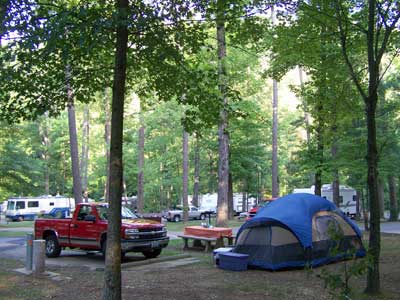
Sometimes we did go on the ever-popular-with- Jim camping trip. We would make it to Lake DeGray in Arkansas or (even closer if we were really broke) to Caddo Lake just over the Texas line. We set up the tent and gathered wood for the campfire. The kids were excited, and Jim was in heaven. He often relived memories of camping trips out west with his family when he was just a boy. He happily regaled us with stories of the bear that he could hear breathing outside the tent. How his Dad had taught him to take no food into the tent and to tie up any food items and hang them high in a tree overnight. How he went exploring the camping site and nearly walked right off a cliff. These tales did not inspire courage in me, and you can ask the kids, I almost always slipped out to the car to sleep after everyone else in our intrepid family group was asleep. Jim was always trying to recapture those halcyon days of his youthful adventures. His main challenge was getting me into those joyfully recalled outdoor memories.

I am the quintessential city slicker. I grew up in Baltimore playing hopscoth on the pavement and riding my bike. For our annual vacations there was one scenario and one scenario only. We went ” down ne oshen.” Ocean City, Maryland. We stayed in motels that opened right onto the beach. At night we strolled the boardwalk and bought Thrasher’s french fries and corn dogs. There were no tents or campfires involved in these beach vacations. My early adventures did not equip me with the skill of getting excited about arriving at a campsite and setting up a tent and emptying all the articles out of the car which you had just packed in the car. I had not learned to be patient while the coals got hot enough to cook the food while everyone was starving after the long drive to the campsite. But I tried. God knows I tried.

Usually the first nights of these camping excursions really were a treat. Change of pace. Rustic settings.The smell of campfire food. I usually had imagination enough to unpack franks and beans. Jim opened a can of potatoes and cooked them with bacon in a skillet on the fire.The makings for S’mores which had been hastily purchased on the way out of town were retrieved from the car. Hey now on that first night, I could get into eating around the campfire.Also I enjoyed the lingering around the fire to tell stories and sing songs. Fun! But I had different emotions when we started the let’s get ready for bed routine. This involved walking to a restroom facility (sometimes quite a hike) if we were in a state park. Sending the beams of a flashlight ahead into the night, I stumbled my way to the facility that was crawling with Daddy Long-legs spiders and attracting moths and mosquitoes like crazy to the lights on the cinderblock building. There was a brave attempt made to potty whilst darting looks around for spiders, and then the brushing of the teeth in a disgusting sink, and then the trudge back to camp if the batteries in the flashlight had not already started to fade.

If it were a more primitive camp like Daisy State Park where Jim took us to camp when the babies were still in diapers, there were no restroom facilities. It was dark and wet because the rain had not let up since we crossed the state line into Arkansas. We had to rig an indoor potty with a large cooking pot which of course tumbled over before the night was through and sent us packing– loading the toddlers and all the equipment hurriedly in a downpour into the car for home. That was one first night that was not so good. Another first night that comes to mind  is the one none of us slept a wink at DeGray in our new pop up Jim could not wait to try out. The large black crows called out so early in the morning it was impossible to sleep and thus began the second day of camping when everyone is tired and grouchy. We had quite a few of these second days of camping in our married life. Enough said.

Oddly enough many years after these memories come unbidden into my heart and mind with the arrival of the sweltering last days of summer, I now live in central Arkansas just minutes from Lake DeGray and those crows. My camping enthusiast husband is now gone and hopefully organizing camping trips in much more beautiful climes and pest free places in heaven. How I wish I could share another miserable night with him and my now grown kids during the dog days of August.


Memorial Day Memory

13015337_10208916335886740_8748723688661370203_nI love Memorial Day! As a child I looked forward to it with so much excitement! Just before 9:30 on those late spring mornings, I felt the rumble of the American Legion marching band coming down our street. As they approached, neighbors came streaming out of their houses, and the children congregated along the sidewalk elbowing for a great vantage point. The blare of the bugles and the cacophony of the drums pounded so much anticipation into the air around me, I thought my heart would burst.

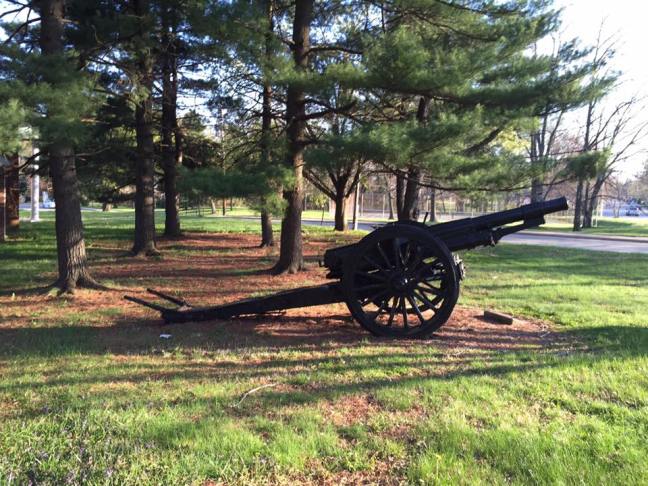
I loved the various uniforms of the musical groups. Some dressed with a flair like Zorro and others sported the military standards. I picked one fast stepping soldier and marched along side him all the way to the Parkwood cemetery several blocks down the street. Once we passed the cannon in the park entrance, the bands circled and stopped with a great “Hut, Hut!” at the American flag. Speakers spoke of war and sacrifice and love of country. I did not at that age fully understand the sobriety of the occasion of remembering our fallen in foreign wars. But I did know that we had a glorious flag that you raise and lower with respect and that men and women once gave their lives to keep it flying.

Then the big moment arrived; at least for the children, it was the high point of the march. A color guard of soldiers snapped their rifles off of their shoulders and aimed at the sky. A 21 gun salute fired from their guns. The shell casings dropped noisily to the ground after each round was fired. I scrambled to get one along with countless other kids. I managed to pick one up and proudly put it in my pocket. I had a treasured memento to show for my Memorial Day adventure. I no longer have that yellow gold metal cartridge after the many years which have ensued, but I have the memory of honoring those who died in service to their country with great stirring music and inspiring words. That sense of patriotism is treasure indeed.

Remembering Jimmy

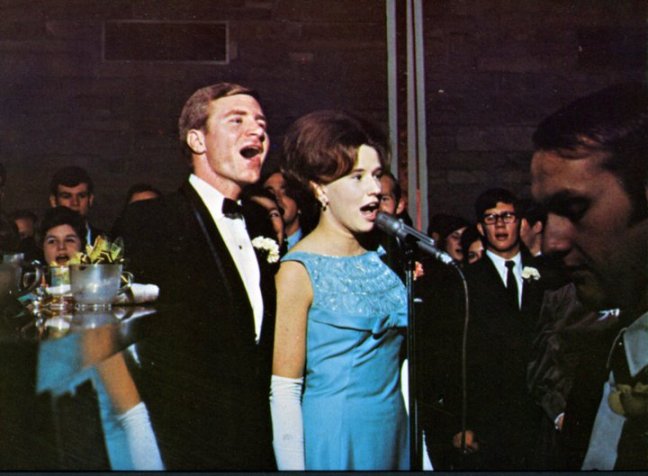
“Pastor Jim” as so many men, women, and children called him over the years was simply “Jimmy” to me. I remember so clearly when I first spoke to him in the cafeteria line at Oral Roberts University in 1967.  “Hi, I believe you’re new on campus,” I volunteered as I extended my hand to shake his. He turned his head and focused those azure blue eyes on me as he returned my greeting.  “Oh hello. I’m Jimmy Hatcher,” he said flashing a smile and speaking with a pleasant touch of drawl. “What a dreamboat!” I clearly remember thinking.

He stood six feet tall and sported sandy hair. He was friendly and easy to approach. I found my heart “strangely warmed” to use the words John Wesley used to describe a divine encounter. I was from that moment of connecting with those beautiful blue eyes of his on the alert for other places and times when I might “run into” Jim. I discovered he was a seminary student and had just arrived in Tulsa from Louisiana at the mid semester break. He worked in the library in the evenings, friends told me. I was suddenly in need of much research assistance. In fact every night you could find me hitting the books and looking quite helpless.

Our relationship was first a friendship, and how blessed I was to call Jim Hatcher friend. He would help me with my studies, he would offer to pray for me when I was ill or homesick. He shared insights into the Bible which he obviously loved and read with frequency and even devotion. He told me about a retreat where Tommy Tyson, a much loved Christian speaker, would be speaking in Ardmore, Oklahoma and offered me and other friends a ride to the weekend gathering. I accepted the invitation to accompany him and other hungry college freshmen to a “Camp Farthest Out.”

At the retreat in rural Oklahoma, a hundred or more assorted Christians from many denominations sang choruses and listened to sermons and testimonies. We prayed in small group settings for each other. We took long hikes among the camp trails and cabins. It was a slice of heaven for me so far from home and facing all the many new academic and social challenges of life at a university. I met Jim’s Dad and Mom and his brother Craig. I also was surprised to hear that the other featured speaker at the retreat would be the Reverend James Brown from Parkesburg, Pennsylvania. This man led the service of praise and prayer on a Saturday night two years previous in his small Presbyterian church close to my home in Maryland where I had opened my heart to the Lord and asked Him to fill me with the Holy Spirit. I was so happy to see Rev. Brown, and I still remember that he delivered a powerful sermon that night called “Jesus, Friend of Sinners.”

During Rev. Brown’s message that evening I felt a profound moving of God’s Spirit in my heart. I knew I was having a divine appointment. And now as I look back on that providentially arranged service of worship, I realize God was giving me a peek into my future because six years later I would stand with this man who was sitting to my left- Jim Hatcher- in front of this minister Rev James Brown, and we would be married and enter into a holy covenant that would determine and bless the rest of my life.

Eventually our friendship would grow into a  God-breathed love and a long lasting commitment although it would not be an easy route to marriage and a new life together. Jim’s Dad would pass away in 1968 and Jim would leave seminary to care for his Mom. He would work in several different jobs and try to find his way after the sudden loss of his father whom he adored. I, meanwhile, would graduate and return to my home in Maryland in 1970 and eventually find a job and ministry position in Parkesburg serving as the youth minister at the Upper Octorara Presbyterian church where Rev. Brown was the pastor.

By the grace of God Jim and I would come together again after being separated by hundreds of miles and four long years. Jim called me out of the clear blue one day and said he was wondering if I were “dropped, pinned, going steady or engaged.” When I said “No, to all of the above,” Jim drove to Pennsylvania at Christmas of 1972 and asked me to marry him. I was speechless, but managed to nod my head in assent. God had given me the friendly blue-eyed Southern gentleman! It was all a girl come ask for.

The wedding took place in the old historic church in Chester county Pennsylvania on May 5, 1973. We would first live in Tulsa and try to make a life around Jim’s position as an admissions counselor for the university. However we both were restless and felt God’s calling to ministry on our lives. Jim would try a stint at Perkins seminary in Dallas, and I would try a secular job in real estate. During his entrance interviews at Perkins, the officials spoke of “demythologizing the Bible.” We both knew God had Bible teaching and pastoring for us. After prayer and fasting we decided to refuse the liberal interpretation of the Scriptures that the seminary offered and simply trust the precious Holy Spirit to teach us how to minister the truths about God’s love and Jesus’ grace to people. In the fall of 1974 we left Dallas and drove to my parents’ home in Baltimore where we could live rent free for a season and seek the Lord.

Jim worked as an office painter at night in Washington D.C. and used the money to pay off student loans. I soon got involved with young people and served as a youth counselor and activities’ director at Randallstown Presbyterian church in the northwest suburbs of Baltimore. We loved this period of our early lives. We sensed God’s Spirit’s anointing on us to sing and teach God’s word to youth and home groups. We eventually moved to Jim’s home in Shreveport, Louisiana when some of the leaders in the area formed a multi-faith ministry non-profit organization in the north part of the state and invited us to sing at a conference they were sponsoring at the Shreveport Civic Centre. The invited speakers gave testimony to dramatic new outpourings of the Holy Spirit among denominational churches across the nation. Jim and I sang and also gathered the children up and prayed with them while the conference speakers held forth. Many parents told us they preferred our meeting with the children where we sang and laid hands on each other to the learned speakers.

“Christian Ministries of Shreveport” became our spiritual “covering” and provided many varied opportunities for us to learn about caring for people. They offered to provide some financial support in exchange for our representing them in home groups and churches interested in the charismatic renewal. In this way we were introduced to venues for our guitar playing and singing and for our teachings about the Holy Spirit’s workings in our lives. We were like the early church. We met in homes and in rented public venues. We shared in Catholic masses and Pentecostal churches. We shared in summer camps and marriage retreats. We shared in children’s meetings and youth conferences and adult study groups. But soon our flexible life style  of travel and ministry would be interrupted by the coming of our own children.

Rebecca Christine Hatcher made her appearance in the Schumpert hospital in Shreveport on the Sunday morning of May 2, 1976. Our good friend Ed Dilworth’s father was the well respected  area obstetrician who delivered her. She was a precious pink little creature who completely stole our hearts. She was good natured and put herself to sleep easily with the help of music and recorded books. She was a singer from an early age and a reader too. In a few months after her birth, I discovered we were expecting again. This time it was a beautiful baby boy – James Christopher- who made his way into our hearts the very next May 4th.  He was born playing the guitar and making everybody smile. Not really, but it seems like it.

After the children came, Jim and I had a gathering of friends at our house, and we prayed together about starting a new church in Shreveport where the Holy Spirit would be free to move in the many gifts of His presence in the church. Tongues, interpretation of tongues, prophecy and words of knowledge and wisdom and discernment, healing and miracles were all desired and welcomed. It was a rich time. We incorporated our faithful friends and supporters into a non- denominational church and called ourselves Zion Christian Fellowship. At first we met in a local Doctor’s home but moved to the Smith building on the Centenary College campus in Shreveport as we grew and needed more room. We sojourned for a while at the LSU-Shreveport campus, but eventually purchased a church property on Greenwood Road in west Shreveport.

From 1979 to the year Jimmy passed away in 2002, this local fellowship of believers met and worshiped the Lord and prayed for people to be saved from sin and filled with God’s Spirit. We taught the truths of discipleship and how God has made healing and abundant life available to us in this life. We invited the local Jewish congregation to our service during the Feast of Tabernacles. We hosted tours to Israel and prayed for the peace of Jerusalem. We loved our city and always tried to be a blessing to the people God brought to us.

I miss those days. They were not without stresses and challenges, but nothing worthwhile is. Jimmy was a pastor at heart. He loved people. He  performed hundreds of weddings and dedicated countless babies. He was moved with compassion for the sick and was a frequent visitor of the sick from all different churches at the area hospitals. He was a worshipper. He could play any musical instrument but was especially gifted on the guitar. He and I led many folks in worship over the years. It brings tears to my eyes to remember making harmony with my sweet Jimmy in every possible setting. We even sang at the walls of Jericho. And shared sweet adoration of the Savior down in the dark dungeon in Caiaphas’ house in Jerusalem where Jesus was held on the night before He was crucified.

In the year before Jim died suddenly of an AVM (an arterio-venous malformaton) hemorrhaging in his brain, Jim was compelled to write down all the Lord had taught him through some thirty years of ministry about communicating the Gospel to people. He had no idea he had little time left on the earth, but he faithfully rose early in the mornings in the years of 2000 and 2001 and sat at the computer writing and editing His remembrances. He was consumed with the desire to get it all down on paper for his children and anyone else who might want to read his memories. Jim had been influenced by many ministers and teachers, but I have to say Oral Roberts was probably the strongest mentor. Jim could preach by heart “the Fourth Man” sermon that Oral preached so effectively in the tent revivals of the 40s and 50s.

Jim often shared the story Oral used to illustrate our loving Father’s heart. Jim, sounding a lot like Oral, would often tell how a little boy once carved a sailing vessel out of wood and played with it for hours in a stream that flowed behind his house. One day a strong wind blew up and carried the boat out of reach in a moment. The boy could not catch up with the boat in the swiftly moving water and was so saddened by its loss. However one day the boy was in a toy store in a nearby town and saw the boat for sale. He knew it was his very own boat because his initials were still faintly visible where he had carved them on the bottom of the boat. When the store owner heard the story of the boy losing his boat, he simply said, “You will have to pay the price I have set. It is mine now and is for sale.”

So the little boy determined in his heart to work hard for as long as it would take to raise the steep price. He did chores at home as well as for friends and for strangers, and at long last, he had saved the money for the purchase of the boat. The happy day came when the boy went and claimed his boat. As he walked home, the boy was heard to say, “Little boat, little boat you are twice mine. I made you and I bought you back.”

As you read through the memories Jim records about the Lord he served so well, please know God loves you and that you belong to Him. He made you and He bought you back. He paid the high price to buy you back from eternal separation from God by sacrificing His only begotten Son whose spotless blood paid for our sins. We have a place in the Father’s heart through the atoning love of the Son. You have a place in the Son. You always will have the place of a beloved son or daughter who is twice Your Father God’s. He made you and He bought you back.



Let me introduce you

Introductions are important and sometimes socially awkward. When you meet someone or perhaps you introduce a friend or acquaintance to others for the first time, do you struggle for just the right words? Perhaps you include in the initial phrases something about where the friend lives or hails from. Perhaps you say what they do for a living or what common interest brought you together. Looking back on life, it is interesting and often remarkable to call to mind the exact circumstances as well as the words that were spoken when we first met people who later became extremely important and even precious to us.

Consider the first chapter of John’s Gospel as the writer John introducing us to the most important person in all the universe, the God of eternity! The beloved apostle does not make small talk, but rather gets right to the point. “World” he says, “Here is the Word!” Here is the One who was with God from the very beginning and helped him create the universe. Nothing was made without Him. He is the source of all life and His life/light came into a dark world and shines. Darkness attempts to extinguish the light but the light will outlast the darkness. The Light who comes from God wants to meet and indwell everyone who has been cut off from the Light of God through the disobedience of Adam.

Next the gospel writer teaches The Word had a forerunner to announce His coming! There was a man called John whom God sent to make the introduction. He was sent into the world of men to bear witness to the Son of God who was Life and Light. Since Christ the Word that expressed the Father’s Mind was the divine agent in creating the universe, He came into the world so men and women could “know” Him and “receive” Him. Thus a new birth, a new creation, was made available to fallen people who were made for living in the light forever but who had been darkened by sin and death.

John the Baptist was not the Light but he announced the true Light was in the world. He declared that God had pitched His tent in our world and we could see His glory as he lived out His life of unprecedented “grace and truth.” John lamented that even though He came to His own people, they did not receive Him. But the Good news of the gospel of John is that “as many as received Him, to them He gave the right to become the children of God.” John 1:12 NKJV. Receiving Him would bring about a new birth of the spirit, not by the passion of the flesh or human effort, but by the will and power of a loving God.

Think of what a privilege it was for John the beloved disciple to introduce God incarnate to the world. His words in the fourteenth verse of the first chapter of his book recording the life of Christ are immortal and known and loved by millions of people. “And the Word became flesh and dwelt among  us and we beheld His glory, the glory as of the only begotten of the Father, full of grace and truth.” Today we have that very same privilege as modern day disciples of Jesus the Messiah. We get to share the Good News. We can go tell it on the mountains. Tell it in the cities. Tell it in the small towns and in the rural settings. It is our great honor to share the Savior on social media and share Him in person. He wants to be introduced to so many who don’t know Him yet. Let’s have the manners and good graces to step up to folks and say,  “World, here’s the Word.”

Now after the opening fourteen verses we have just read and pondered, the Gospel of John says that religious people began to pepper John the Baptist with questions. They were not asking for an introduction to the Lord. They were questioning and searching for something about John and his message to discredit. The religious know -it -alls asked the Baptist, “Who are you?” “Are you Elijah?” “Are you the prophet Moses said God would raise up?” The Baptizer protested that he was not the Christ nor any of the prophets, but rather “a voice crying in the wilderness” quoting Isaiah chapter 40 verse 3.

Then Pharisees’ henchmen pressed John further and said, “Who gives you the authority to baptize if you are not the Christ or Elijah or the prophet that was promised?” Then in response to these inquiries John the Baptist had the privilege of introducing another member of the Triune God. He said, “I only baptize with water but there is One in your midst whom you do not know. I am declaring that the One upon whom you see the Spirit descending and remaining on Him, this is He who will baptize you with the Holy Spirit.” Here John says, “World and even religious world, here is the Holy Spirit!”

Next day the Gospel tells us that John the Baptist was standing with two of His disciples when Jesus approached them. These two disciples were Andrew and probably John the writer of the story. John the voice crying in the wilderness points to the Lord Jesus and declares with authority, “Behold the Lamb of God!” Those two seekers of truth turned from the Baptizer to the King he heralded that day. They began to follow Jesus and the Lord turned to them and said to them, “What do you seek?” They replied “Teacher, where are you staying?” To which the Lord simply answered, “Come and see.” They followed and stayed close to Him the remainder of that day.

The next introduction in this book of important introductions is when one of the two who we are told is Andrew went to find his brother Simon Peter so he could meet the Messiah. Andrew soon located his brother and “brought him to Jesus.”  Jesus looked at Simon and said, “You are Simon, the son of Jonah. You shall be called Cephas which translated means ‘the stone.'” What an odd meeting this was. Jesus is drawing men to Himself and then naming them and speaking a new identity and destiny over them in His service.

The next day after Simon Peter and Andrew were brought into His circle, Christ travelled to their home town Bethsaida in Galilee where He found Philip. Jesus told Philip to follow Him and he did. Then Philip went to get his friend Nathaniel and encouraged him to come meet Jesus whom Philip said is “the One that Moses and the prophets had foretold.” He told Nathaniel that the man’s name was Jesus of Nazareth to which Nathaniel replied with a question, “Can anything good come out of Nazareth?” Philip simply replied, “Come and see.”

In a little while when Nathaniel got within sight of Jesus, the Lord spoke out and said, “Behold an Israelite indeed in whom there is no guile.” To this strange greeting, Nathaniel asked how Jesus knew him or his character. Without batting an eye Jesus countered that he had seen Nathaniel sitting under a fig tree before Philip had even come for him. This word of knowledge made an impression on Nathaniel since he immediately believed and declared, “You are the Son of God. You are the king of Israel.”

Jesus was amazed that such a small demonstration of his power had won Nathaniel’s heart. He said to his newest disciple, “Because I said to you ‘I saw you under the fig tree’ you believe? You will see greater things than these.” Then the Lord went so far as to promise Nathaniel and his disciples that “hereafter you shall see heaven open and the angels of God ascending and descending upon the Son of Man.”

I love this first chapter of the Gospel of John so full of introductions and first encounters. This scene with Nathaniel and our Lord interacting at the beginning of their relationship is my favorite. Jesus reveals to this honest Jew with no deceit in his heart that He is the Messiah and that He has climbed down the ladder of his Jewish lineage and now stands in the human family as a Redeemer of sinful, wasted lives and the source of new birth and Holy Spirit infilling. He is available to Jew or Gentile, male or female, rich or poor, slave or free. He is the Messiah of Israel and the Savior of all. Jesus is the ladder God showed their ancestor Jacob. He is the link between heaven and earth. Angels ascend and descend on Him and by Him to our aid.

In the spirit of this Gospel of John, let’s get busy introducing people to Jesus. You could start right where you are. You could say something like, “Let me introduce you to a download from heaven, share a link to a great God, befriend the friend of all sinners and tell you the name that is above all names. Jesus descended the ladder from heaven and offers to give you access to God in heaven. He will take you to heaven. Like Nathaniel, He sees you sitting there in front of your computer. He even knows if it’s an Apple.


Why Christians celebrate Passover.

JtwE7099452

Why do Christians celebrate the Jewish feast of Passover? Are we crashing their party? Is there good reason for church people to break out the seder plate and ceremonial foods and remember the miracle of the Exodus from Egypt?

I did not know the answer to this question until I was an adult in my thirties. I watched a Messianic Jew named Zola Levitt explain the history and symbolism of Passover on a Christian TV channel. As this bearded rabbi unfolded the truths of this ancient Jewish practice, I was mesmerized. I called my husband Jim into the room. Jim and I had met at Oral Roberts University and soon after we married had founded a non denominational church in Jim’s home town of Shreveport. As a seminary student Jim had accompanied Oral Roberts and a musical team to Israel not long after the Six Day war in 1967. He had seen first hand the miracle of the Jewish state reborn after centuries of the Jews being dispersed and destroyed in every country under the sun. He had a heart for the Jews and a hunger to understand their place in God’s plan for the planet.

Jim was caught up in the televised presentation about the Passover like I had been. He said with sudden energy, “I am going to invite Zola to our church to teach us these truths in person.” And thus my love affair with all things related to the Jewish feasts began. The very next year on Easter Sunday, Zola Levitt stood in Zion Christian Fellowship in Shreveport, Louisiana and helped us discover our Jewish roots in the Passover. He made the Lord’s Supper come alive as it was foreshadowed in the Seder meal . This new/old feast day prefigured  our redemption through Christ in a pageant so simple any child could understand its holy and transcendant meaning.

Let me share some of the truths about this Jewish meal as it relates to Christians that the Messianic teacher taught me that day. First of all the father of the household wears an all white linen robe and ceremonial hat as he stands at the head of the table. Zola said, “I stand here hosting this holy table of remembrance as a type of the risen Lord.” How striking he was in his priestly robe beaming down on us from the raised section of the sanctuary of the church. Then he called for a woman to come up on the stage to light the candles on the table. Since I was the pastor’s wife, he called my name and I mounted the steps somewhat cautiously. He handed me some matches to strike and indicated the candles he wanted me to light. He explained to the congregation that a woman in the Jewish home traditionally brings the light to the proceedings. Since Mary was the virgin mother who brought the Messiah -the Light of the world-into human flesh, this tradition honors her with prophetic foresight.

Next the father pours the first of four cups of wine –the cup of sanctification- and then he blesses the wine and the bread. In praying he follows a program that reaches back 3500 years to the time of the Exodus. This program is called the Haggadah, and it has served the purpose of preserving all the very old practices connected to celebrating Passover throughout the centuries that have come between us today and the first celebrants.

After drinking the first cup, the host takes three pieces of the unleavened bread and places them in a matzah cover. He takes out the middle piece of matzah and breaks it in half and then wraps one half in a linen napkin and then buries it. It is hidden somewhere close to the table but out of sight. Perhaps  under the cushion the guests are reclining on. Later the children will search for it and earn a reward for bringing it up out of hiding.

Then the youngest child will ask the four questions starting with “Why is this night different from all other nights?” This gives the host an opportunity to tell the story of God’s miraculous rescue of His people when they were slaves of Pharoah in Egypt.

“Why do we eat bitter herbs?” is the next question. The host can then remind the child of the bitterness of slavery and how the tears we shed when we eat the bitter herbs are like the tears our forefathers shed when they were slaves.

‘Why do we dip the parsley in the salt water two times?’ and “Why do we all recline at this meal?” are the third and fourth questions.

These questions refer to the seder plate in the center of the Passover table. This special plate is on a rotating stand and displays the ceremonial foods: bitter herbs (horseradish), charoses (an apple, nut, date mixture that represents the mortar the Hebrew slaves had to make to hold the bricks together,) charred shank bone of a lamb representing the protective mark of the blood of a lamb the Hebrews were instructed to put on their doors against the angel of death that visited the houses of the Egyptians that fateful night, salt water in a bowl which symbolized the tears of the children of Israel and parsley for dipping in the salt water and a boiled egg.

This egg is not found in Biblical passages but crept in over the years to the proceedings. It is certainly a tip of the hat to pagan fertility rites and symbols which still persist to this day even in our modern observances of Easter. Eggs, rabbits and chicks are all fertility symbols and have nothing to do with our redemption story. One rabbi has wise observed the hard boiled egg is a symbol of the Jew. Always in hot water and resilient.

After father has answered the four questions, he drinks the second cup of wine and slowly drips ten drops of the red liquor on a white plate as he calls out the names of the ten plaques God sent on the Pharoah to soften his heart and make him willing to release God’s people into the wilderness to worship Him.

After this dramatic part of the story telling, the best meal of the year is served. Since the Temple no longer stands where lambs were offered to God, the Jews in modern times do not serve lamb but rather chicken or beef as well as the bread without leaven. The night of their deliverance the Jews had to eat in haste, and so there was no time for the bread to rise. Prior to the feast the mothers and homemakers gave a good spring cleaning to their houses and searched for any tiny bit of leaven. If any crumbs of leavened bread were found they were scraped into a wooden spoon and burned. This fire symbolizes the judgement of God on “chametz” (leaven) and so we too must cleanse our hearts of the leaven of sinful pride which puffs us up and causes us to act in unacceptable ways in God’s eyes. This is why the Scriptures admonish us to “Purge out the old leaven from you that you would be a new lump, just as you are unleavened bread. Our Passover is The Messiah, who was slain for our sake.” I Corinthians 5:7

Upon the conclusion of the passover meal, the children search for the hidden piece of matzah. This is especially touching to me. The children are looking all around for the middle piece of a trinity of matzahs. This matzah is striped and pierced like the body of our Lord. It has been wrapped in a linen cloth and hidden or buried. What a picture of Jesus this is. When a child discovers the hiding piece of matzah, there is great celebration including the giving of gifts and the singing of songs. This piece is brought forth to the table and so this piece of bread along side the third cup of wine makes up the elements of the Lord’s Supper. Jesus at this point in the seder on that first Holy week night pronounced the new reason to take and eat the bread and drink the wine. Not in remembrance of the first Passover and their deliverance from Egypt BUT in remembrance of Him.

Now do you see that Christians are not crashing a Jewish party when they celebrate the Passover but are embracing their own story of salvation? The Lord’s Supper grew out of the old, old story of Moses and the parting of the Red Sea. We follow the Lord in water baptism as the children of Israel followed Moses through the sea after the blood of an innocent lamb had been shed to release them from their slavery. The key is humble repentance and asking for that blood to cleanse us from our sin. Christ our Passover was sacrificed for us. Let us eat the bread of HIs flesh and drink the wine of His blood and be delivered from the rule of sin and Satan every time we observe the Last Supper. In the words of the Apostle Paul in I Corinthians 5:8 in the International version, “So let’s keep celebrating the festival, neither with old yeast nor with yeast that is evil and wicked, but with yeast-free bread that is both sincere and true.”


Is there life after death?

Martin Luther said it well. “Our Lord has written the promise of resurrection, not in books alone, but in every leaf in springtime.”

As we experience spring every year, we are reassured we will enjoy life after death. I have just returned from a road trip across the state of Arkansas and Tennessee. Bursting out in glorious colorful newness on every lawn and roadside stretch of land we drove by were redbud trees, dogwood trees, tulip trees, forsythia bushes, tulips and daffodils. They are delightful brush strokes from the Life-Giver on the tableau of our landscapes in spring declaring,”He lives!”
The resurrection is real. Our loved ones will be raised through Jesus to live again with resurrection bodies as youthful and perfect as His glorious body was when he triumphed over the tomb where His disciples had lain Him outside Jerusalem. Such Good News– you can ultimately eliminate your own fear of dying with this truth. Since Christ is  described as “raised from the dead and the first fruits of those who have fallen asleep” ( I Corinthians 15:20) we shall experience resurrection too if we are His. And becoming His involves simply believing and confessing that God raised Jesus from the dead.

David P Scaer,  a theological scholar, asserts “Christ’s resurrection was not an isolated event occurring only to one person in history, but a cosmic event.” He draws special significance from Paul’s language that” Jesus was dead, but became the first among many who would sleep. “Christ’s submitting Himself to what otherwise would have been an eternal death (i-e., a death for which there is no solution) has changed that death into a temporary sleep for Christians.”

Hallelujah! Christ is risen. Christ is risen indeed!

Today as I was rereading the Gospel account of Jesus’ last days, I discovered a strange person in the garden of Gethsemane where Jesus received a kiss of betrayal from Judas. I had never focused on this young man in the account Mark gives us of the last night of Jesus’ life on earth. Mark 14:51,52 says, “And there followed him a certain young man, having a linen cloth cast about his naked body; and the young men laid hold on him: and he left the linen cloth, and fled from them naked.”
Who is this boy who approached Jesus but then fled when the Temple officials tried to grab him? Why was he only covered by a linen cloth? Some commentators suggest it may be Mark the author of this book inserting himself into the scene. But that doesn’t make sense to me. Nor does the idea it may be John the beloved disciple. But why would he be naked?No, the answer lies in the Greek word for “linen cloth.” It is a specific term for burial shroud. The rich Jews buried their dead wrapped in expensive linen cloths fabricated in Egypt. So my guess is that when Jesus announced, “I am He!” to the guards who came to seize him in the garden after Judas identified him, His declaration not only knocked  a band of beefy soldiers down, but His presence in power raised a boy from the dead. I think the Spirit of God included this resurrected child in the scene of Mark’s account to say that anything can happen when we believe in the Resurrection of our Lord.
I am so glad this incident was captured for us in Mark’s Gospel. Imagine a resurrection in a garden as a precursor and foreshadowing of all the tombs that would ultimately be emptied when Jesus surrendered Himself to the flogging that would follow, and the taunting as a crown of thorns was pressed down on His brow, and the cross leading to His death—– and Resurrection!
Enjoy this glorious season. Spring is full of new life and resurrection as every bulb buried deep in the earth releases sleeping flowers and every lifeless branch explodes in bright blossoms of every hue. He is speaking to us. Life has swallowed up death and the grave has been emptied of dread and fear. Remember the boy who was raised by Jesus’ shout of triumph. “I am that I am,” the Son of God announced. The boy following Christ got away from the legalists and nay sayers. He dropped his burial shroud and gamboled away. You will too one day. Death is not able to hold His disciples down. We are now alive in Him. We have been made partakers of His resurrection. We shall live and never die. Hallelujah!

Morning Star or Evening Star?

“Watchman, what of the night? Watchman, what of the night?” The watchman said, “The morning comes, and also the night” (Isaiah 21:11–12).

“Watchman, what of the night?” leaps from the pages of Scripture as a cry for help that was sounded in the times of Isaiah the prophet. The Assyrian Empire , the ISIS of that day, was stretching a nightmarish specter over the hearts and minds of God’s people. This ancient, impassioned question echoes the fears in our own hearts today as the terrorists of the 21st century in Syria have rapidly spread their violence and lawlessness through the Middle East. As I write this article, the radical Islamists are even seeking to extend their dreaded influence around the globe and even into our own beloved land. This cry to the watchman in Isaiah is addressed to the prophets, the wise, the leaders, the men and women of insight and resource: “What about this increasing darkness in our world? What is happening to us? Watchman, do you have an answer for us?”

Our world is undergoing cataclysmic changes: unprecedented climate fluctuation, earthquakes, tsunamis, economic uncertainty and recession, plagues and mass migrations of people groups fleeing death and intimidation by terrorist organizations. On and on the list continues of events and conditions that drastically are rewriting the story of our earth and making our futures seem perilous and uncertain. Sadly across the world, men and women of all nations and religions clamor for reassurance. As in the time of Isaiah, “Watchman, what of the night?” is the question many people have in their hearts today.

Let us examine the brief answer offered by Isaiah’s watchman: “The morning comes, and also the night.” This response surprises us and seems contrary to natural laws, and to human experience. Never did the night and the morning arrive at the same time. The watchman seems confused, and not able to make up his mind about which is coming, the night or the day.  

The Morning Star

One of the names referring to Jesus in the Bible is the “bright and morning star” (Rev 22:16). If Jesus lives in our hearts, there is always hope for a breakthrough no matter how late in the night or dark the circumstances appear to be around us.

The morning star is often seen as the brightest light in the dark sky, announcing the arrival of the dawn. However there is something unique about the morning star. The earliest astronomers called the planet Venus the morning star. But surprisingly enough, at certain times of the year Venus is also the “evening star,” announcing the approaching night. Isn’t it amazing how the very same sign in the sky can signal the approaching night, as well as herald of the coming morning?

    I recently read an article by the Executive Director of the International Christian Embassy in Jerusalem, which has greatly impacted me and encouraged me. He wrote “In my experience, there are two types of Christians who, although they both read the very same Bible, have very different perspectives. Many Christians – often western – read the prophecies of the Bible about the future and see a rather devastating message of darkness, gloom, and decay awaiting the church and the world. However, if you visit some home churches of China you would hear a completely different message. A brother from China recently told me: “In China we are so excited, because the prophetic word promises us that the whole earth will be covered by the knowledge of the glory of the Lord like the waters cover the sea!” He clearly was expecting global revival!”
“Not long ago, ” Dr. Bühler goes on to say, “we visited a large church movement in Nigeria, which is actively training young Christians in prayer and academics to become the future leaders of their country. In some Latin American countries, like Guatemala, more than 50% of the population have become born-again believers. These are churches filled with hope for what God can do!?”
According to this Christian leader and much travelled ambassador of Christ, some believers are “evening star Christians,” and some are “morning star Christians.” Reading the same Bible, some believers focus mainly on the darkness predicted, while others are filled with faith and optimism. The truth is that the watchman in Isaiah saw both. He was enough of a realist to see the night coming, but the first of the two phrases that passed his lips was to announce the coming of the morning.

The God of Hope

We need to remember that one of the three main messages the church carries is hope (1 Cor. 13:13). Hope does not disappoint (Rom. 5:5), and it provides an anchor for our souls (Heb. 6:19). God is called a God of hope (Rom. 15:13), which means He identifies His own character with hope. Therefore, we should never give up our confession of hope (Heb. 10:23). No matter what the newspapers, political pundits, and even end-times experts might be telling you, never give up your hope!

In light of believers’ calling to give hope, consider the words the watchman answered some 2,700 years ago in the time of Isaiah — “The morning comes and also the night!” The watchman chose HOPE and inverts the natural order of nightfall and dawn. Yes,  though darkness is spreading across the world in many places, I see morning coming. The world is shaking and insecurity is increasing on many levels. But, there remains one rock solid reality that cannot be shaken and that is the Kingdom of God! His Kingdom will be the dawning of a brand new eternal day. A “great, getting up morning” in the words of the spiritual.

As the Babylonian, Egyptian, and Assyrian armies pressed in against the Kingdom of Israel, the prophet Isaiah brought a message of hope. In a time when powerful empires threatened the sovereignty of his homeland, and with moral decay spreading throughout Israel, Isaiah found comfort and courage in the promised Messiah. “The government will be upon His shoulders. And His name will be called Wonderful, Counselor, Mighty God, Everlasting Father, Prince of Peace. Of the increase of His government and peace there will be no end…” (Isaiah 9:6–7). Supreme authority is given in heaven and on earth to Jesus Christ. The Apostle Paul understood that every “throne, dominion, principality and authority” (Col 1:16) are under His sovereignty and need to serve His purposes.

Kingdom Expansion

But Isaiah saw something that is even more exciting! He not only revealed the aforementioned attributes of our Savior, but also boldly stated that His Kingdom will miraculously expand and grow forever: “Of the increase of His government there is no end.” Therefore, it did not surprise me to hear from Dr. Bühler that Christians in Lebanon in the midst of ISIS causing havoc in the name of Islam, are seeing the churches full of men with long beards and women in burkas who are seeking Jesus. They also reported that a wonderful move of God is taking place among Muslim refugees.
From another mission leader, DrBühler even heard of underground church growth in Saudi Arabia and in Iran, where a historic revival is taking place. The ICEJ director’s son, who attends a Bible school in Germany, reported a few weeks ago that in one evening service at their camp nine Syrian refugees gave their lives to Jesus! A pastor from Berlin also shared with us that several churches in his city are packed with refugees coming to Christ.
It is true that at times God will shake a nation (and its Supreme Court may I add), and even our lives, in order to accomplish His purposes. The prophet Haggai prophesied a great and final shaking which will come “once more” over the entire world and even the heavenlies. But the ultimate result will be that God will build His temple: “For thus says the LORD of hosts: ‘Once more (it is a little while) I will shake heaven and earth, the sea and dry land; and I will shake all nations, […] and I will fill this temple with glory,’ says the LORD of hosts. […] ‘The glory of this latter temple shall be greater than the former,’ says the LORD of hosts …” (Haggai 2:6–9). The New Testament also reveals the church as triumphant, greeting her bridegroom as a beautiful and spotless bride. True, some will yield to  peer pressure, temptation, and the deceitful allure of this world. But it is the grace of God which can carry us through and make us overcomers!

No darkness can stop the Kingdom of God! On the contrary, often it is darkness that He uses as His vehicle to come to our rescue (Ps. 18:4-12). The prophet Daniel saw that even in a time when unprecedented trouble and darkness come “…such as never was since there was a nation,” there will be those “who are wise” and who “shall shine like the brightness of the firmament, and those who turn many to righteousness like the stars forever and ever” (Daniel 12:1-3).

In closing I want to encourage YOU. As the darkness grows around us, it is not a time to despair, but to let our light shine before men. The only unshakable entity is – and will be – the Kingdom of God, so let us surrender completely to our King and listen and obey Him. His Kingdom and His righteousness in His WORD and CHURCH will steady us and give us great courage and hope. Many people will come into His Kingdom even in these end times; there is hope for the church in every nation. There is great hope for you and me as believers. Since the morning comes to break through all darkness, make a resolution today to be a morning star Christian.

The Ultimate Consolation

During my Advent readings prior to Christmas this year, one description of our Lord in his incarnation flared off the page with fresh meaning. The character of Simeon is one of my favorite characters in the cast surrounding our Lord’s birth. The Gospel of Luke introduces this good man by stating “…and behold there was a man in Jerusalem whose name was Simeon, and this man was just and devout, waiting for the Consolation of Israel and the Holy Spirit was upon him (Luke 2:25).

Here was a saint whose chief occupation was looking for the Kingdom of God to come. In prayer the Lord had promised this faithful Jew that he would see the Messiah before his eyes closed in death. Simeon was waiting for God’s Consoler. On the day Mary and Joseph brought their infant son to the Temple to be circumcised as the Jewish law commanded on his eighth day of life, Simeon was alerted by the Holy Spirit that the Anointed One was in the throng that day. He soon located the holy family and took the child in his arms and blessed God for the answer to his prayers. “Lord now You are letting you servant depart in peace according to Your word for my eyes have seen Your salvation.”

There are many wonderful names attributed to the Messiah. Just in Isaiah 9:6 in one prophecy alone Jesus is called Wonderful Counselor, Prince of Peace, Mighty God and Everlasting Father. There are so many others so full of  comfort and promise like Good Shepherd and Sun of Righteousness risen with healing in His wings. But somehow I had never really considered the name and role of Consolation or Consoler.

In the Dictionary the definition of the word “Console” is “to alleviate or lessen the grief, sorrow, or disappointment of; give solace or comfort.” In my own experience of losing my mother and father and my husband in death, I found few people could console me. My children were some considerable comfort because in my husband’s case, they were parts of him that were still present with me. However in the loss of my parents, I found small comfort in people as much as they tried to assure me that they had loved Mama and Papa Lou and would treasure the memories of them.

In large measure my best consolation came from the Word of God and its precious promises of the new body that they would receive like the Lord’s resurrection body and that they would be welcomed to their forever home by the Lord Himself who had promised in John 14:1 “Do not let your heart be troubled; believe in God, believe also in Me. 2“In My Father’s house are many dwelling places; if it were not so, I would have told you; for I go to prepare a place for you.…

A very dear friend of mine needs consoling today. She checked on her mother earlier in the week and found her dead in her chair in the living room. What a shock and what a terrible blow to find your own dear mother already gone from her earthly body. This image of Jesus the Consoler leapt to mind. Jesus came as the ultimate Consoler.  Jesus is the One who was sent by the Father to console us.  How precious indeed. Our loving Lord makes it his business to console us in our worst losses and griefs. He is not only the Comforter but the Consoler.

Whenever I seek to console a friend who has suffered a hurtful wound to his or her heart, I remember President Reagan after the Challenger tragedy as he spoke to the families of the astronauts so suddenly snatched from the lives of mothers, fathers, children and spouses. He quoted a poet whose words soar as high as the astronauts had flown and even higher. The author is John Gillespie Magee Jr. His posthumous fame rests mainly on his sonnet High Flight, which he started on 18 August 1941, just a few months before his death in a air collision over England.

Here are the lovely verses of the poem which appears on many tombstones in Arlington National Cemetery especially those of aviators and astronauts.

“Oh, I have slipped the surly bonds of earth,
And danced the skies on laughter-silvered wings;
Sunward I’ve climbed and joined the tumbling mirth of sun-split clouds –
and done a hundred things You have not dreamed of –
wheeled and soared and swung high in the sunlit silence.
Hovering there I’ve chased the shouting wind along
and flung my eager craft through footless halls of air.“Up, up the long delirious burning blue
I’ve topped the wind-swept heights with easy grace,
where never lark, or even eagle, flew;
and, while with silent, lifting mind I’ve trod
the high untrespassed sanctity of space,
put out my hand and touched the face of God.


     Jesus came as the ultimate Consoler; only He can promise to pilot a flight to touch the face of God for each of His own. This is a consolation worth waiting for. With Simeon let us rejoice and say, “Now you are letting me (or my loved one) depart in peace for I have seen the face of my Consoler.”

New Year or New Fear?

As a new year begins, I ask myself “Is this a new opportunity to trust in my Father God who had led me faithfully since I burst on the scene over sixty-six years ago? Or will the prospect of this untried path produce new fears in me?” One comfort that springs to mind is a poem popularly titled “God Knows” by Minnie Louise Haskins. I have read it and passed it on to others many times as the new years have rolled over on the calendar of my life. Let me cite just a few of the best lines here.


God Knows

And I said to the man who stood at the gate of the year:
“Give me a light that I may tread safely into the unknown.”
And he replied:
“Go out into the darkness and put your hand into the Hand of God.
That shall be to you better than light and safer than a known way.”
So I went forth, and finding the Hand of God, trod gladly into the night.
And He led me towards the hills and the breaking of day in the lone East.


The poem, published in 1908, was part of a collection titled The Desert. It caught the public attention and the popular imagination when the then–Princess Elizabeth gave a copy to her father, George VI who quoted the inspirational verse in his Christmas radio broadcast in 1939 to the whole of the British realm.

Please take it to heart as you return to work and your day to day duties in the household and community after the end of year celebrations. You have something -actually Someone- who is better than any physical light or familiar pathway. You have the faithful Paraclete. The Holy Spirit of the Living God. The One Jesus calls along side you and even places with in you as a Guide and Teacher.

Rest in Him and trust Him in the New Year 2016. He knows you and He knows what is to come. He will hold your hand and be your companion on the journey as well as your pathfinder. You will have the pleasure of His company and the wonderful knowledge that He who created you and knows you better than any other one is with you.  Like a Good Shepherd He has prepared the pasture where you will feed, cleared it of harmful underbrush and potential dangers. He rejoices over you with singing as you move ahead in pasturage chosen for your health and growth and to bring you closer to Him who leads you and provides for your life. Just know “God knows.” He does. He really, really does. And that is enough. Those words spoken by a king brought an entire nation through the second World War, and they will bring us through the present crises we face in the time just ahead of us today.